





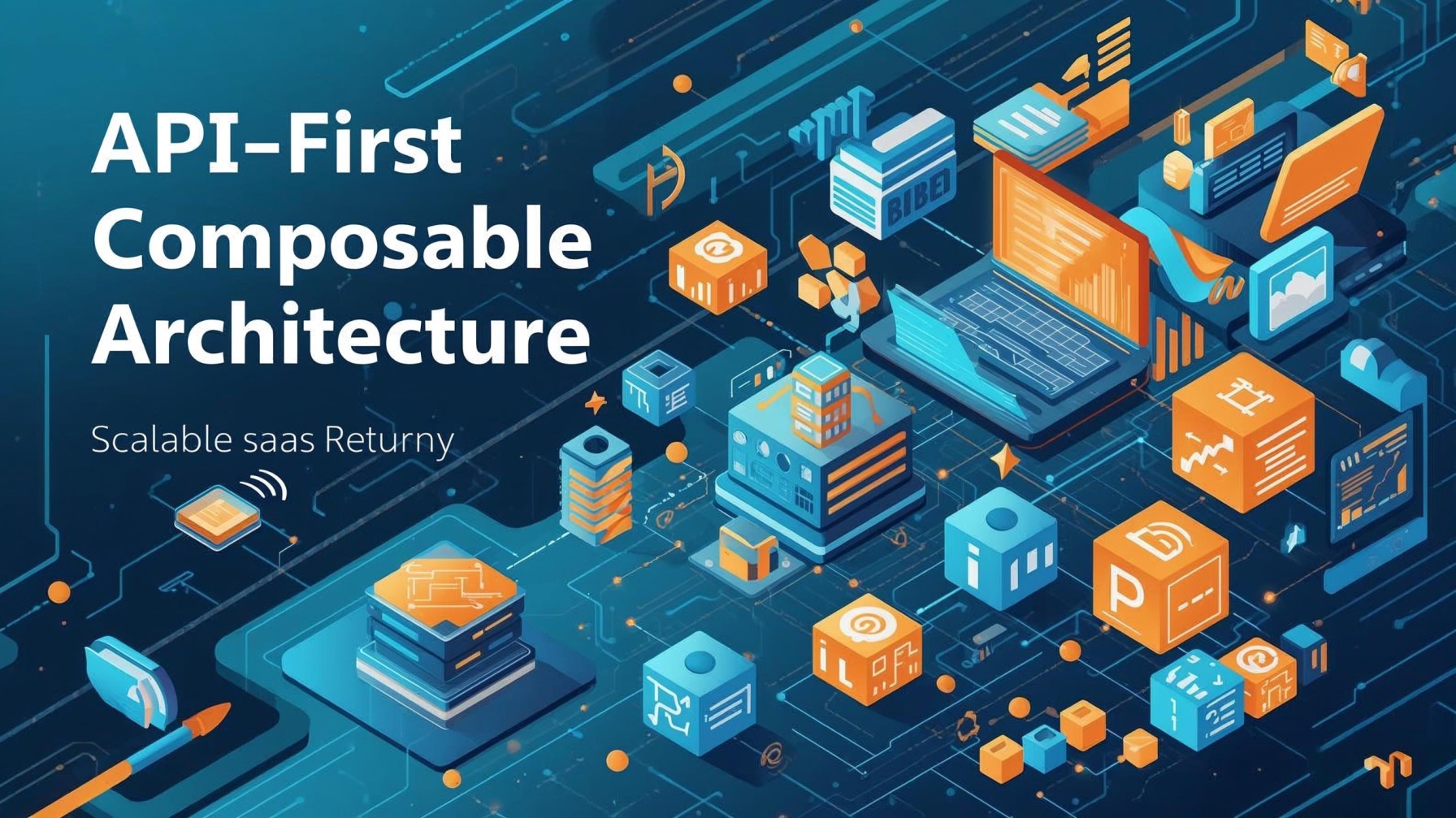
Discover how API-first and composable architecture transform SaaS scalability, accelerate development cycles, and future-proof your tech stack. Learn implementation strategies, business benefits, and real-world examples from top tech leaders.
Introduction
Traditional monolithic applications are rapidly being replaced by flexible, modular systems that support faster growth and innovation. API-first and composable architecture represent a fundamental shift in how modern SaaS companies build and scale products—treating APIs as the foundation rather than an afterthought. According to Gartner, by 2026 all top 20 cloud platform and SaaS providers will offer component marketplaces to support composable strategies.
This architectural paradigm allows organizations to assemble software from independently deployable components that communicate seamlessly through APIs. The result? Enhanced agility, resilience, and a future-proof foundation for continuous innovation.
Understanding API-First Architecture
API-first development means designing and developing APIs before building the user interface or core features. In this approach, the API is treated as its own product—reusable, scalable, and adaptable across multiple platforms.
Unlike traditional development where backend and frontend teams rely on each other’s progress, API-first supports parallel development. Backend engineers create APIs while frontend developers use mock responses to build UI components. This design contract ensures consistency across every platform that consumes the API.
What Makes Composable Architecture Different?
Composable architecture breaks your application into modular, independent components such as billing, authentication, analytics, or product catalog. Each component communicates through well-defined APIs, enabling:
- Independent deployment
- Independent scaling
- Faster iteration
- Minimal downtime
- Reduced dependency on single vendors
- Elimination of monolithic bottlenecks
This modularity ensures each part of your system can evolve at its own pace without impacting the entire application.
Business Benefits Driving ROI
1. Accelerated Time-to-Market
API-first removes traditional bottlenecks. Teams can work simultaneously and release features faster. Pre-built components and reusable APIs reduce development cycles from months to weeks.
2. Enhanced Scalability and Flexibility
With workloads distributed across microservices, you can scale only what you need. Whether it’s your recommendation engine or checkout service, each component scales independently. API-first also supports multi-cloud and hybrid environments, reducing vendor lock-in.
3. Seamless Integration Ecosystem
Modern SaaS products must integrate with CRMs, payments, analytics, and AI tools. APIs act as universal connectors—powering integrations across web, mobile, and IoT. Third-party developers can extend your platform faster, creating a vibrant ecosystem around your product.
4. Cost-Effective Development
Reusable services eliminate redundant work. You build once and reuse everywhere—across your website, mobile app, and partner ecosystem. Modular design also reduces long-term technical debt.
Real-World Success Stories
Spotify: Multi-Platform Excellence
Spotify uses API-first to synchronize functionality across iOS, Android, web, desktop, and embedded devices. APIs handle streaming, recommendations, and user profiles at scale.
Stripe: Developer-First Payments
Stripe’s clean, well-documented APIs made it the default choice for global payments. Its API-first approach unlocked mass adoption by developers.
Twilio: Cloud Communication Pioneer
Twilio’s entire business model is built on APIs for voice, messaging, and video. Developers can integrate communication features without managing infrastructure.
Eurail: Seamless Digital Ecosystem
Eurail used API-first to unify eCommerce, content, and customer interactions, enabling faster iterations and consistent user experiences.
Implementation Strategy
1. Design APIs Before Features
Define endpoints, request/response schemas, and data contracts before building UI or core logic. Prioritize consistent naming, stable versioning, and clear use-case-driven design.
2. Build Comprehensive Documentation
Tools like OpenAPI/Swagger ensure clarity and consistency. Good documentation improves developer experience and accelerates partner integrations.
3. Establish API Governance and Versioning
Maintain backward compatibility, enforce standard error responses, apply rate limits, and support pagination and filtering.
4. Monitoring, Testing, and Reliability
Implement automated testing, logging, and service monitoring. Ensure that failures in one module don’t cascade across the system. Fault tolerance is essential.
Challenges and Their Solutions
Integration Complexity
Composable systems require thoughtful orchestration. API gateways, service contracts, and shared design standards ensure seamless interoperability.
Performance and Latency
More components mean more network calls. Solve this with caching, service mesh, optimized payloads, and load balancing.
Security Concerns
More APIs expand your attack surface. Use authentication, throttling, encryption, and regular audits.
Cultural & Technical Shift
Teams need training and a shared understanding of modular architecture. While the shift requires upfront effort, the long-term productivity gains are significant.
API-First vs Traditional Development
| Traditional Development | API-First Development |
| Sequential workflow | Parallel development |
| Tight coupling | Loose coupling |
| Slow feature releases | Faster iteration |
| Hard to scale | Highly scalable |
| Expensive changes | Modular, cheaper evolution |
API-first takes more planning but delivers significantly better agility, reusability, and scalability.
Future-Proofing Your Tech Stack
Composable and API-native architectures enable seamless integration with AI models, automation tools, and real-time analytics. When technologies evolve, you can replace components without rebuilding the entire system. This adaptability ensures your SaaS product stays competitive in a rapidly shifting landscape.
Conclusion
API-first and composable architecture are not trends—they are the future of SaaS development. They deliver unmatched flexibility, speed, and scalability while enabling seamless integrations and lower development costs. Industry leaders like Spotify, Stripe, and Twilio prove how transformative this approach can be.
For SaaS companies aiming to thrive in an interconnected, modular world, adopting API-first and composable architecture is no longer optional—it’s essential.